Wood Flooring in Chino, CA, Done From the Slab Up

Refinishing, repair, water-damage replacement and new hardwood installs, with the slab tested and the build year checked before any work starts.

Chino Wood Flooring has spent more than 20 years refinishing, repairing and installing hardwood floors in Chino, CA, from full sand-and-refinish jobs and stair conversions to slab-leak replacements and new engineered floors. We work on solid oak laid in the 1970s and on engineered planks glued to slabs poured last year, and we start every job by finding out what the floor is sitting on.

Most wood floor problems in this city trace back to one of three things: moisture coming up through a concrete slab, a finish that has worn through to bare wood, or a floor that was never the right product for the room. We test the slab, measure what is left of an engineered wear layer, and confirm the house’s build year before quoting, so the estimate describes the floor you actually have rather than the one a flyer assumes.

The work covers wood floor refinishing, hardwood floor repair and restoration, water-damage replacement, subfloor repair, parquet and herringbone, stair treads, and replacing carpet with hardwood. Each estimate is written, itemized, and explains what we found before it explains what we recommend.

Get Your Free Quote

Fast response • No obligation

So we can reach you about your request.

So we can send you a confirmation after you submit this inquiry form.

  • 20+ Years of Wood Flooring
  • Slab Moisture Tested First
  • Free Written Estimates

What we do

Our Services

Hardwood floor refinishing, repair and installation in Chino, CA

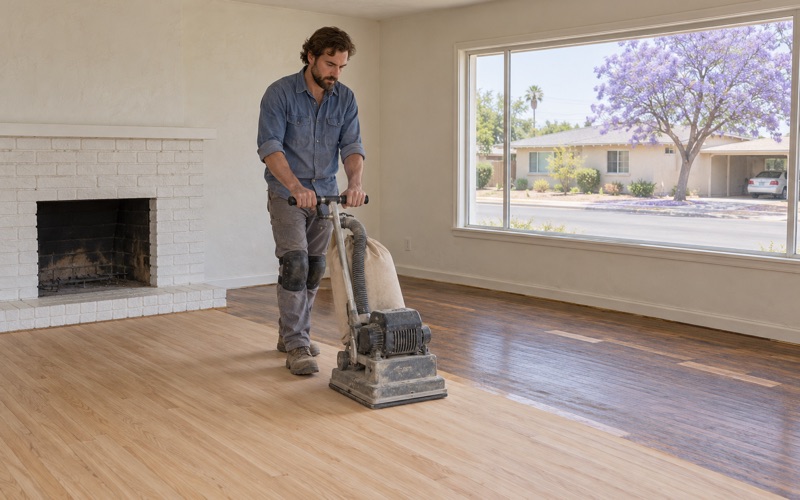
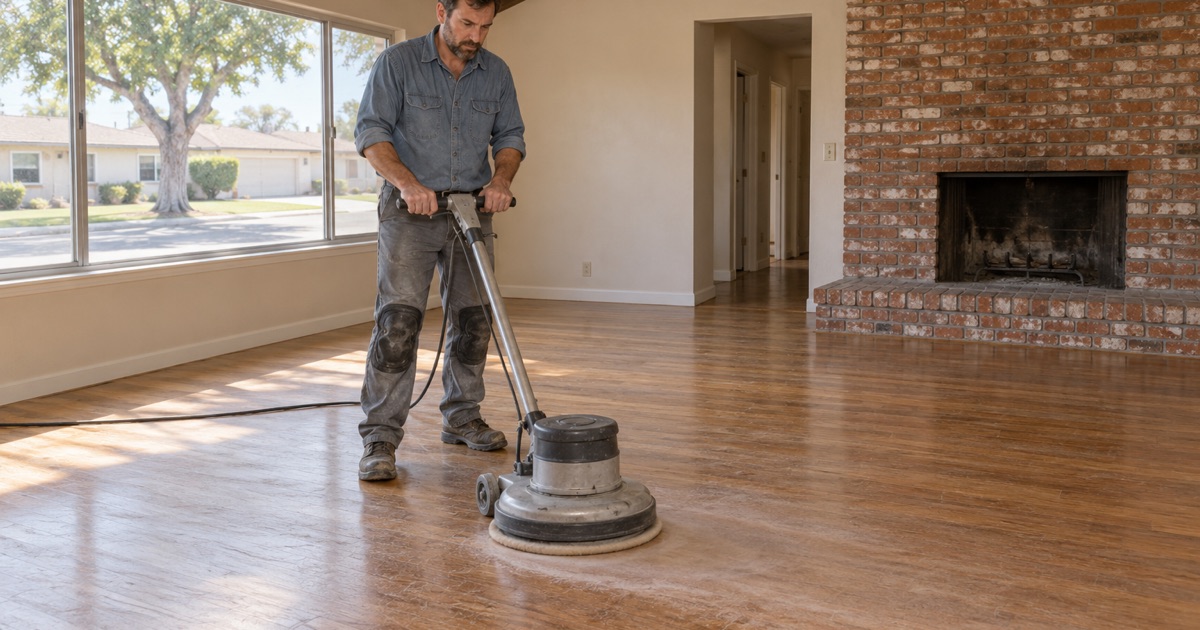
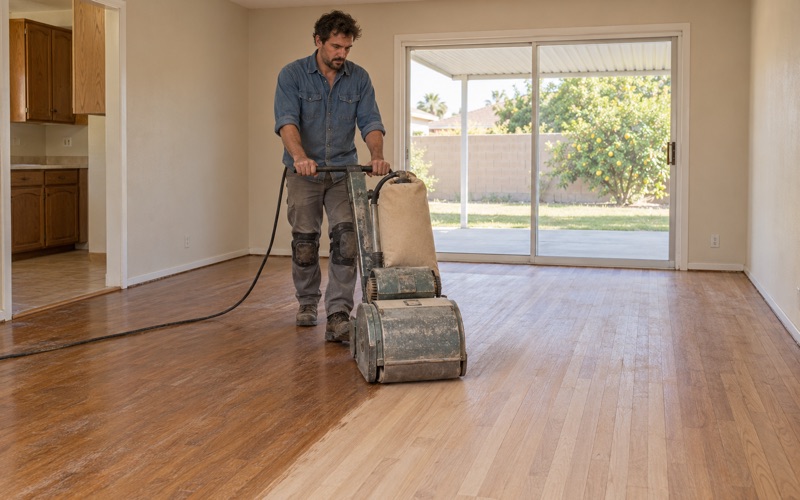
Worker walking a drum sander along red oak strip flooring in a 1970s single-story ranch house in Chino, a band of bare oak behind the machine.

Wood Floor Refinishing

Full sand-and-refinish or screen and recoat for oak, maple and engineered floors, with contained dust and a written cure schedule.

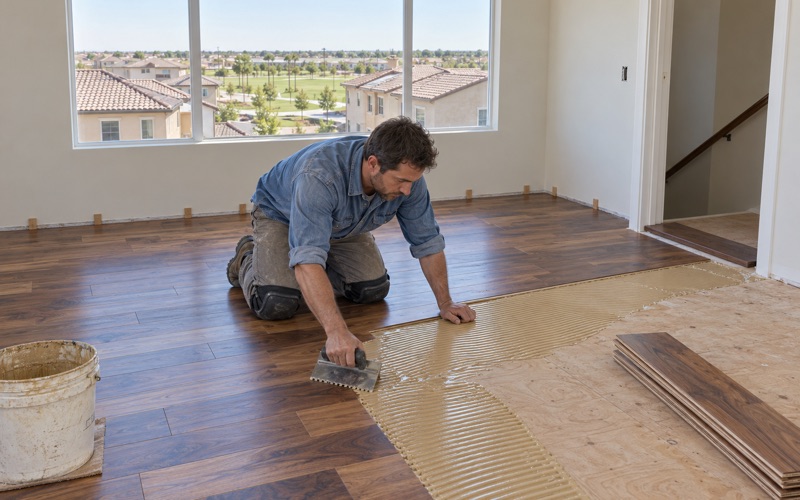
Worker spreading flooring adhesive with a notched trowel ahead of new engineered hickory planks on the upper floor of a Chino house.

Engineered Hardwood Flooring

Engineered hardwood installed over concrete slabs and wood subfloors, with the slab tested, the wear layer chosen and the method matched to the room.

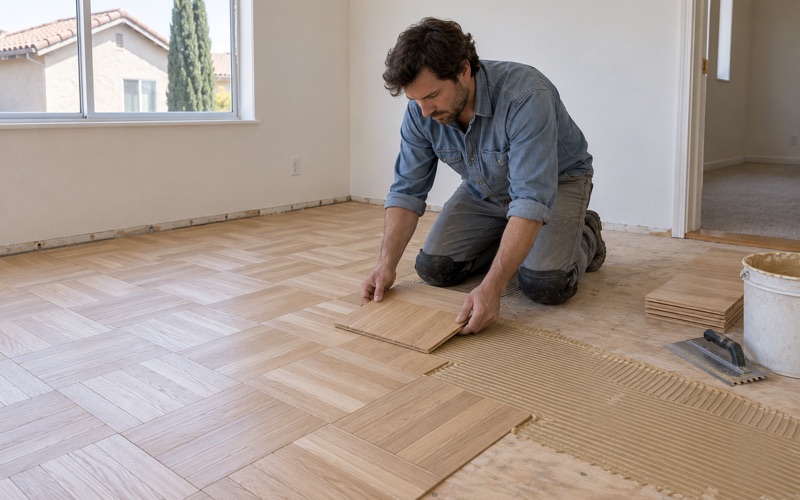
Worker setting a new white oak finger-block parquet square into adhesive in an upstairs room of a Chino house.

Parquet Flooring

Repair, refinishing and new installation of parquet tile and block floors, including loose tiles, missing pieces and black mastic checks.

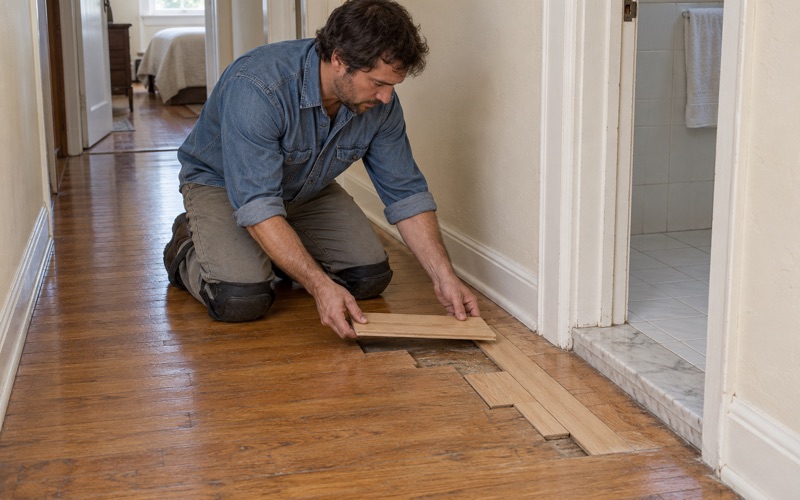
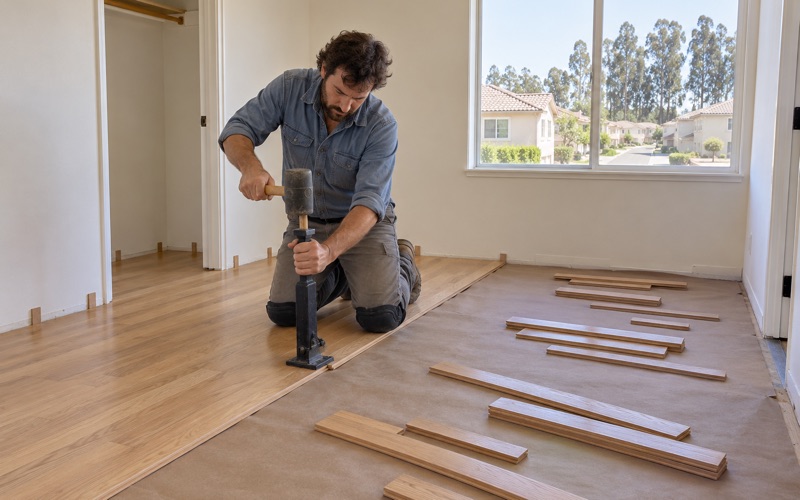
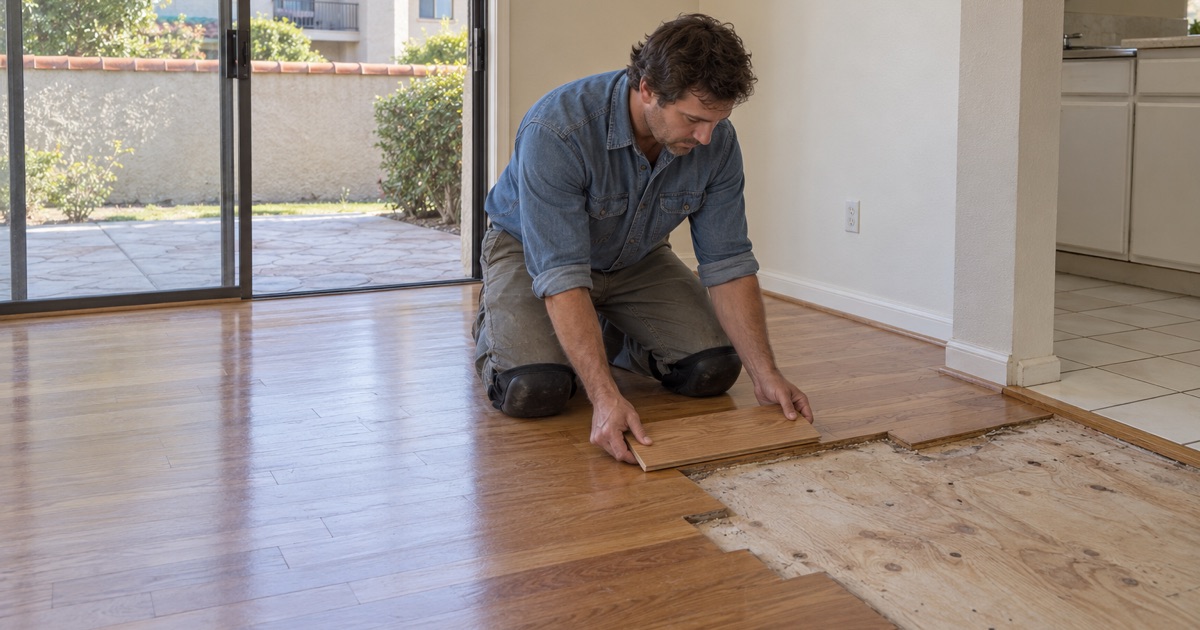
Worker tapping a new red oak strip into a staggered repair with a tapping block and mallet in a Chino hallway.

Hardwood Floor Repair

Board replacement, squeak and gap repair, pet stain and termite damage fixes, blended into the floor you already have.

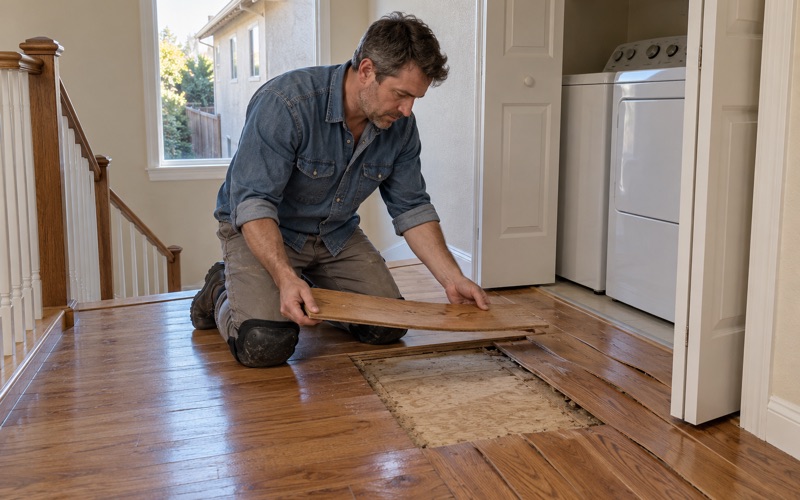
Worker lifting a cupped oak board out of a floor damaged by an upstairs laundry leak in a Chino house.

Hardwood Floor Water Damage

Slab-leak, appliance and AC leak damage assessed with moisture readings, documented for the adjuster, and repaired or replaced once the floor is dry.

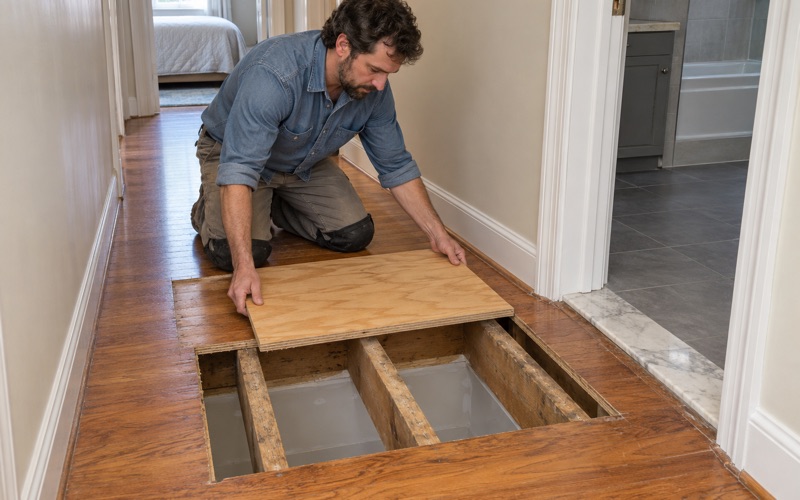
Worker lowering a new plywood subfloor panel into an opening over the joists of an upstairs bathroom doorway in a Chino house.

Subfloor Repair

Soft spots, sags, squeaks and water-damaged plywood or OSB repaired, and slabs flattened, so the wood floor above stays flat and quiet.

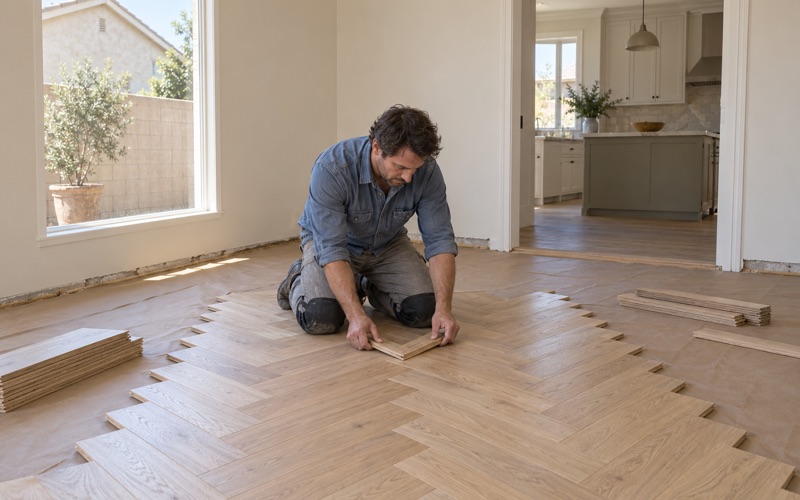
Worker setting a white oak slat at the point of a new herringbone floor in the dining room of a Chino house.

Herringbone Wood Floor

Herringbone and chevron wood floors in solid or engineered oak, laid out from the room's center and glued or nailed to a prepared subfloor.

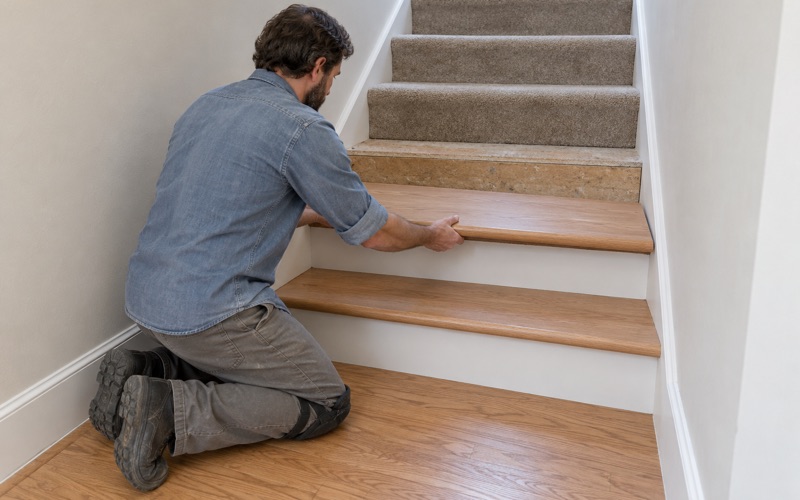
Worker lowering a new oak retro tread with a rounded nosing onto a stripped staircase in a two-story Chino house.

Hardwood Stair Treads

Carpeted stairs converted to hardwood, worn treads refinished, and new treads, risers and nosing fitted and priced by the step.

Worker walking a square-pad orbital sander across the original oak floor of a 1950s ranch house in Chino.

Hardwood Floor Restoration

Old or neglected hardwood brought back: boards repaired, gaps and stains corrected, then sanded and refinished as one floor.

Worker driving a flooring nailer against the tongue of a new solid oak board in an upstairs bedroom of a Chino house.

Hardwood Floor Installation

New solid and engineered hardwood floors, installed by the right method for your slab or subfloor, with transitions and trim finished cleanly.

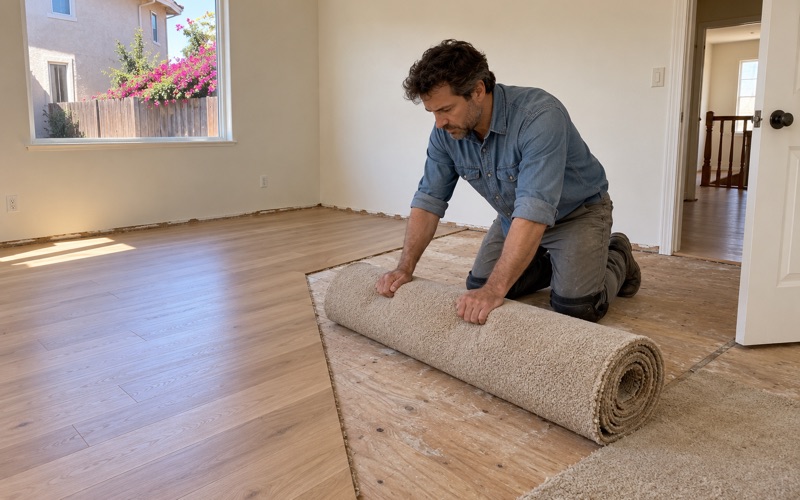
Worker rolling up old carpet beside a new oak floor half laid in a bedroom of a Chino house.

Replace Carpet With Hardwood

Carpet torn out and replaced with solid or engineered hardwood, including bedrooms, living rooms and stairs, with the floor underneath prepared first.

Two Decades of Chino Wood Floor Work

Worker angling a wide engineered white oak plank into place in the open-plan great room of a 2000s two-story house in Chino.

More Than 20 Years on Wood Floors

Our crews have sanded, repaired and laid wood floors for more than 20 years, which means we have seen what a slab leak does to a glue-down floor six months later and what an overaggressive drum sander does to a thin engineered veneer. That history is the reason our first visit is spent measuring and testing rather than selling, and why the written estimate names the conditions we found.

Why Choose Chino Wood Flooring

Build Year Checked First

No sander touches a floor until we have confirmed when the house was built, because the EPA lead-safe rule reaches paint disturbed in pre-1978 homes and Chino’s 1970s tracts are full of painted baseboards and stair skirts. That check sets up containment before the first pass, rather than discovering the issue halfway through the living room.

Every finish we apply fits the South Coast AQMD Rule 1113 wood coatings limit, so the product on your floor is one that can lawfully be used here. A contractor hauling in an out-of-basin solvent finish exposes the homeowner to the problem, and the cheapest can on the shelf elsewhere is not an option inside this air district.

Slab Moisture Recorded in Writing

Never do we glue an engineered floor to concrete without a moisture test first, and the reading goes on paper against the NWFA guideline. Chino has houses on slabs from every decade since the 1950s, so the test prevents the cupping and adhesive failure that follows when a crew skips it to start a day sooner.

Wear Layer Measured Before Promising

A refinish quote on engineered flooring is only as honest as the veneer under it, so we measure the wear layer at a vent or threshold before promising a full sanding. That keeps a thin top layer from being sanded through to the core, rather than learning its thickness when the plywood shows.

Stairs Priced Tread by Tread

Each stair is quoted by its treads, risers and nosing, not buried inside a square-foot figure, so two- and three-story homes get a stair number they can compare. That avoids the change order that appears when a crew discovers the staircase was never really in the price.

Something Is Wrong With The Floor

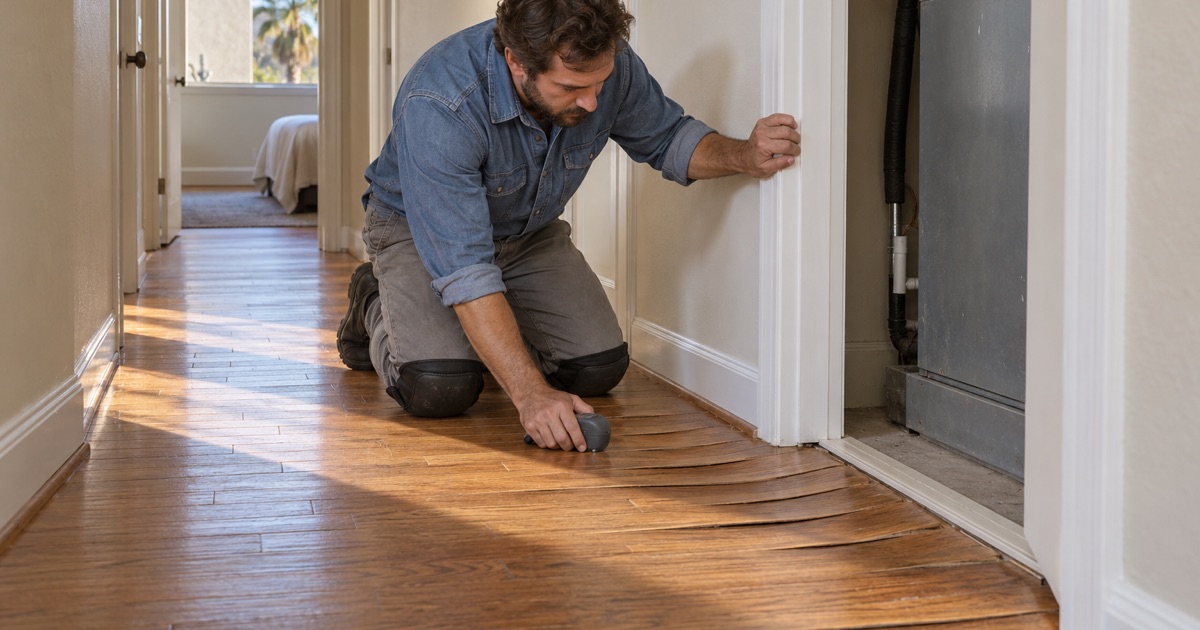
Worker pressing a moisture meter to cupped red oak boards outside a hallway air-handler closet in a Chino house.

Cupping, Crowning and Lifted Boards After a Leak

Cupping is when board edges rise above the centers, crowning is the reverse, and buckling is when boards lift off the subfloor entirely; all three are moisture moving through the wood. We find the water source and take moisture meter readings before deciding whether the floor can dry flat or must be replaced. Sanding a cupped floor too early leaves crowns once it dries, which is why we wait for the readings.

Slab Leak Floor Replacement

A warm spot underfoot is often a hot-water line leaking inside the slab, and by the time the plumber has rerouted or repaired it, the wood above has usually been wet for weeks. Once the leak is fixed we test the slab until it is dry enough, then replace the affected boards or the full run. Laying new flooring onto a damp slab only restarts the cupping.

Air Conditioner and Drain Line Leaks on Wood

A clogged condensate line or a leaking air handler in a closet can soak the same corner of a floor for months before anyone notices. We trace the stain back to its source, check the subfloor and neighboring boards with a moisture meter, and replace only what is truly damaged. Fixing the drain line first is the step that keeps the repair from repeating next summer.

Hollow or Popping Glue-Down Engineered Floors

Hollow spots in a glue-down engineered floor mean the urethane flooring adhesive has lost contact with the slab, from poor trowel coverage, slab moisture or a high spot. We tap-map the floor, mark the hollow areas, and inject adhesive or lift and reset boards depending on how large they are. Ignoring hollow spots lets the boards flex until the tongue and groove joints crack.

Floors That Pop or Crack at Night

Wood gives up moisture and shrinks as the house cools and the air dries overnight, and a floor that was installed without a proper expansion gap or proper fastening will tick and pop as it moves. We look at the perimeter gap under the baseboard, the fastener schedule and the subfloor before recommending anything. Often the fix is at the edges rather than across the whole room.

Drywood Termite Frass and Beetle Holes

Small piles of pellets along the baseboard are usually drywood termite frass, while tiny round exit holes in the boards can point to powderpost beetle. We identify which it is, send you to a licensed pest control operator for treatment first, then replace the damaged boards with matched species and grade. Replacing boards before the treatment only feeds the next generation.

Black Pet Urine Stains

Pet urine that sits in the wood reacts with the tannins in oak and turns gray, then black, and the stain usually runs deeper than any sanding can reach. We test a spot with a sanding pass, and when the color does not lift, we cut out and weave in new boards rather than sanding a dip into the floor. Board replacement also removes the odor source, which sanding alone does not.

Engineered Boards Peeling or Delaminating

Delamination is when the top veneer of an engineered board separates from its plywood or HDF core, often after water exposure or a failed bond at the factory. We check whether it is a few boards or the whole lot, and replace the failed boards with matched stock where we can find it. A delaminated board cannot be glued back reliably, so patching it only buys a few months.

Cloudy, Hazy or Dull Floor Finish

White haze and cloudy patches are usually trapped moisture, cleaner residue or a product that is incompatible with the existing finish, while a dull, gray traffic lane is finish worn thin. We test which it is before recommending a deep clean, a screen and recoat, or a full sanding. Recoating over residue only locks the haze under a new layer.

Refinishing The Floor You Already Have

Worker screening the worn finish on an oak floor with a floor buffer before a recoat in a 1970s ranch house in Chino.

Full Sanding Versus Screen and Recoat

A screen and recoat abrades the existing finish with a buffer and adds a fresh coat, while a full sanding takes the floor to bare wood with a drum sander and an orbital sander through a grit sequence. We recommend a recoat when the finish is worn but the wood is unmarked, and a full sanding when scratches, stains or gray wood show. Choosing the recoat when the wood is already exposed simply seals the damage in.

Dust Control During Hardwood Refinishing

Our dustless sanding setup connects the sanders to a vacuum system, and we seal off the work area with plastic so the rest of the house stays clean. Whether you can stay home depends on the finish and the layout: many families stay in the unaffected rooms, but nobody should walk on wet finish. We plan the route in and out of the house before the first pass.

Orange Oak Back to a Natural Tone

The orange and yellow cast on older red oak floors comes from oil-modified polyurethane ambering over decades of sun. Sanding to bare wood removes that finish, and a clear waterborne polyurethane or a neutral stain brings the floor back to a lighter, more natural color. We show you sample boards on your own floor before choosing, since oak takes stain differently room to room.

Blotchy Stain and Recoats That Peeled

Blotchy stain usually comes from uneven sanding, skipping grits, or a species like maple that resists stain, while a peeling recoat means the new coat never bonded to the old one. We correct both by sanding back to fresh wood, using water popping where a darker stain needs even absorption, and testing adhesion before any recoat. That avoids repeating the mistake on the second try.

Low-VOC Finishes Under South Coast AQMD Rules

South Coast AQMD Rule 1113 caps the VOC content of clear wood floor finishes at 275 g/L, and it applies on the job site, not only in the store. We use waterborne polyurethane, compliant oil-modified products and hardwax oil finishes that sit inside that limit. The lower odor is also why many households can stay in the unaffected rooms during the work.

Sun Fade and Rug Outlines by Sliding Doors

Wood exposed to sun through sliding glass doors changes color, while the boards under a rug stay the original shade, leaving a sharp outline. A full sanding removes the discolored surface layer and resets the whole floor to one tone. We also talk through window film and rug rotation so the new finish ages evenly rather than drawing the same outline again.

How Thin an Engineered Wear Layer Can Get

An engineered wear layer is the real hardwood on top of the plywood core, and each full sanding removes part of it. We measure it at a vent or threshold before quoting; a thick layer can take several refinishes, while a thin one may only take a screen and recoat. Sanding through the veneer ruins the board, so the measurement comes before the promise.

Refinishing Hardwood Stairs

Stair treads take the heaviest foot traffic in the house and cannot be reached by a drum sander, so each tread, riser and nosing is sanded by hand and with detail sanders. We price the staircase by the step so the cost is clear from the start. The treads get the same stain and finish system as the adjoining hallway, so the two surfaces match at the landing.

Replacing Carpet, Tile And Builder-Grade Floors

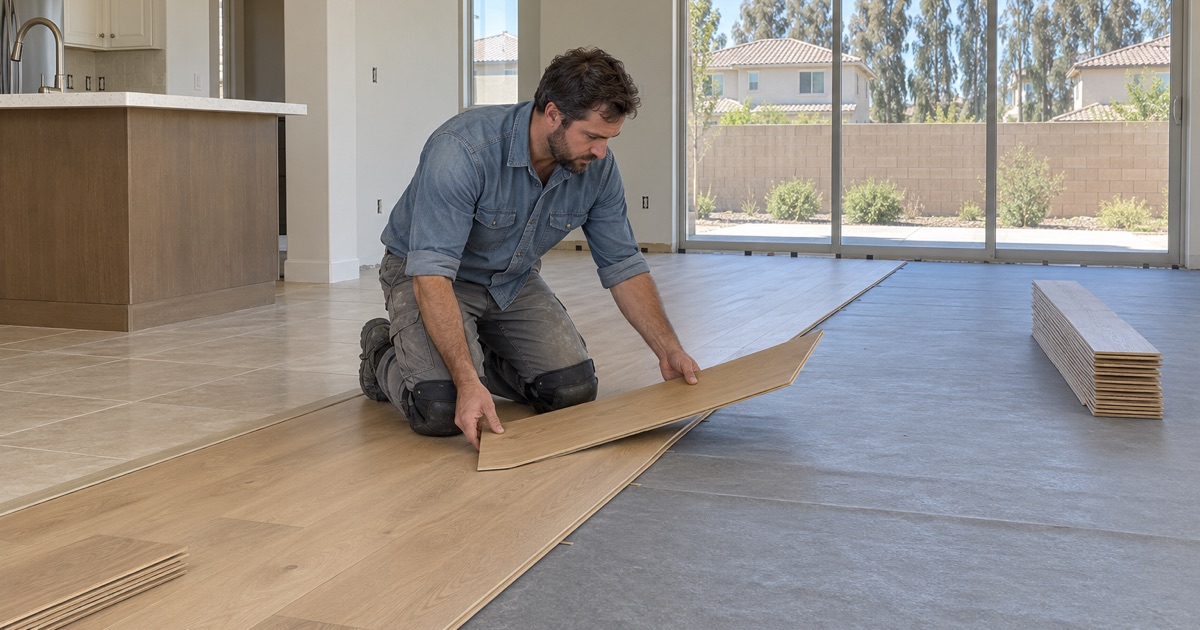
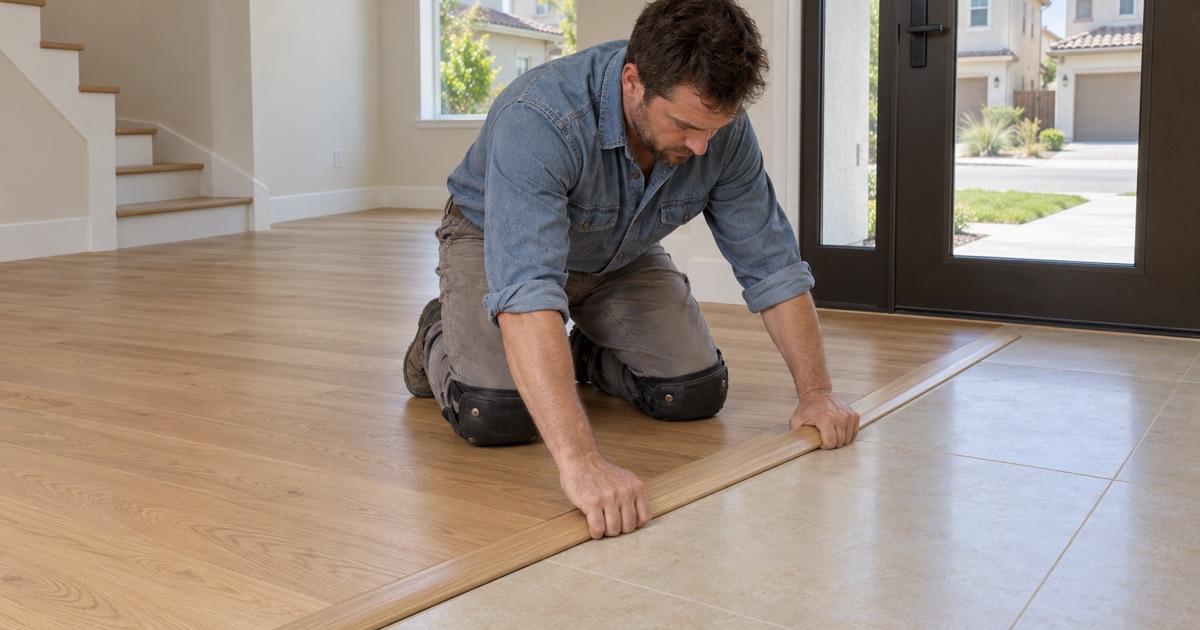
Worker seating a flush oak reducer where new white oak flooring meets the tiled entry of a three-story house in Chino.

Builder-Grade Carpet and Vinyl Plank to Real Wood

Many newer homes in master-planned neighborhoods came with carpet, ceramic tile and vinyl plank as the included flooring, and homeowners replace them with real wood after closing. We remove the old flooring, check the slab for moisture and flatness, and install engineered hardwood glued down or floated over the proper membrane. Checking the slab first matters most in a new home, where the concrete may still be drying.

Tented or Popped Tile on a Slab

Tile that lifts into a tent shape has usually lost its bond from slab movement, moisture or the lack of a movement joint, and it often happens across a whole room at once. We remove the tile, grind off the old thinset, and test the slab before laying hardwood in its place. Wood over a properly prepared slab also handles movement better than the tile that failed.

Oak Under the Carpet in Older Houses

Pulling back carpet in a 1970s or 1980s house sometimes reveals solid red oak or white oak that was covered up years ago. We assess the boards for damage, pad residue and staple holes, then sand and refinish them rather than replacing a floor that is still sound. Where the oak is too damaged, we patch in matched boards so the room reads as one floor.

Tack Strip Holes and Stuck Carpet Pad

Carpet installers nail tack strip around the perimeter and staple the pad, leaving holes and foam residue on whatever wood is underneath. We pull every staple, scrape the pad residue, and fill tack strip holes with wood filler or trowel filling matched to the finished color. Skipping that prep leaves visible dots and patches that no finish hides.

White Powder on the Slab After Tear-Out

A white, chalky powder on concrete after old flooring comes up is efflorescence, salts carried up by moisture moving through the slab. It is a sign to test the slab carefully, with in-situ relative humidity testing or a calcium chloride test, before gluing anything down. We record the reading and choose an adhesive or moisture membrane that matches the result.

Engineered Wood Glued to a Concrete Slab

Glue-down installation bonds engineered boards directly to the slab with urethane flooring adhesive, which feels solid and quiet underfoot. We test the slab first, write down the reading against the NWFA guideline, and use a Class I vapor retarder or moisture membrane system where the reading calls for one. That test is what separates a floor that stays flat from one that cups within a year.

Solid Hardwood, Engineered and Vinyl Plank Compared

Solid hardwood is one piece of wood through its thickness and can be sanded many times, but it is usually nailed to a wood subfloor. Engineered hardwood has a real wood wear layer over a plywood or HDF core and suits concrete slabs, while vinyl plank is plastic and cannot be refinished. We explain which fits your subfloor and budget rather than pushing one product for every room.

Carpeted Stairs Converted to Hardwood Treads and Risers

Many two- and three-story homes were built with carpeted stairs, which wear through at the nosing and trap dust. We remove the carpet and tack strip, then fit new hardwood stair treads, risers and stair nosing cut to each step and finished to match the floor. Each step is measured on its own, since no two stringers in an older staircase are exactly alike.

Black Mastic Under Old Parquet and Tile

Older parquet, vinyl tile and sheet flooring were often set in black mastic, and some of those adhesives contain asbestos. South Coast AQMD Rule 1403 requires an asbestos survey before renovation that disturbs suspect materials, with only narrow exceptions. We flag the material before demolition and schedule the survey first, rather than grinding it and finding out later.

Condos, Rentals, Claims And Sales

Worker holding a new oak sample board against a worn condo floor to match its color after leak damage in Chino.

Condo and Townhome Flooring Approval

Most associations require written approval before hard flooring replaces carpet, and many specify the underlayment. We read the association rules with you, prepare the product and underlayment details the board asks for, and wait for approval before ordering. That avoids ripping out a finished floor because the association never signed off.

Footfall Noise and Acoustic Underlayment

Hard floors carry footfall sound to the unit below far more than carpet does, which is why associations set sound ratings. An acoustic underlayment under a floating or glue-down floor reduces impact noise, and we match the product to the rating the building requires. Choosing the cheapest underlayment is how neighbor complaints start.

A Leak From the Unit Above

When water comes through the ceiling from the unit upstairs, responsibility usually depends on where the leak started and what the association’s documents say. We document the damage, take moisture readings, and give you a written scope you can hand to the association, your insurer or your neighbor’s. Clear records keep the repair from stalling while three parties argue.

Choosing Your Own Flooring Contractor on a Claim

Insurers often recommend a vendor, but homeowners can bring their own flooring contractor to a claim, and the insurer must share its scope and estimate. We compare our scope with the adjuster’s line by line and point out anything missed, such as trim, transitions or moving furniture. The claim is then settled against a full scope rather than a partial one.

Matching New Boards on a Water Claim

California’s fair claims rules call for replacement that gives a reasonably uniform appearance, which is critical when new boards cannot match an aged, sun-faded floor. We try to source matching species, width and grade, and when a patch will not blend, we document why a larger area needs to be refinished or replaced. That documentation is what an adjuster needs to approve continuous flooring.

Rental Floors Between Tenants

Between tenants, a landlord usually needs worn traffic lanes, pet stains and scratches fixed quickly and within a budget. We recommend a screen and recoat where the finish is only worn, spot board replacement where it is damaged, and a full sanding only when it pays off. Photos and notes of the condition help separate normal wear from damage a deposit may cover.

Refinishing Before a Sale

Refinished hardwood photographs well and removes a common buyer objection before the listing goes live. We schedule the refinish around your listing date, choose a neutral stain that suits most buyers, and allow full cure time before staging furniture goes in. A rushed floor that gets scuffed by movers the day before photos costs more than it saved.

Manufactured Home Floor and Subfloor Repair

Manufactured homes often have particleboard or OSB subfloor panels that swell and sag when water from a sink, toilet or water heater leaks into them. We cut out the soft sections back to solid floor joists, install new subfloor, and lay the new flooring over it. Laying new flooring over a soft subfloor lets the sag return within months.

Areas We Serve

Chino Wood Flooring provides wood-flooring throughout the greater Chino area, with the same crews and the same standards on every job.

Good to know

Frequently Asked Questions

How much does it cost to refinish hardwood floors?

Refinishing is priced by the square foot for the open floor, with stairs quoted separately by the tread and riser. The number moves with how deep the sanding has to go, whether boards need replacing first, the stain, and how many coats of finish the floor gets. We measure and walk the floor before quoting, so the written estimate reflects your rooms rather than an average.

How long does a full sand and refinish take?

Most single-story jobs run a few working days from the first sanding pass to the final coat, and then the finish needs time to cure before rugs and heavy furniture go back. Stain adds a drying day. We hand you a written cure schedule at the start so you know when you can walk on the floor in socks, when furniture can return, and when rugs can go down.

Can engineered hardwood be refinished?

Often, but it depends entirely on the thickness of the top veneer. A thick wear layer can take a full sanding, a thin one can only take a screen and recoat, and some very thin veneers cannot be sanded at all. We measure the wear layer at a vent or an exposed edge before promising a refinish.

Is hardwood a good choice on a concrete slab?

Yes, when the slab is tested first and the right product is used. Engineered hardwood glued down or floated over a vapor retarder is the usual answer on a slab, while solid hardwood is generally a poor fit directly over concrete. We test the slab for moisture and record the reading before recommending an install method.

Which floor finishes can you legally use in Chino?

Chino sits inside the South Coast AQMD, so a clear wood floor finish has to meet the Rule 1113 wood coatings limit of 275 g/L. That rule binds the contractor on the job site, not only the store shelf. Waterborne polyurethanes and compliant oil-modified and hardwax oil products all fit inside it, and we tell you which product is going down before we open a can.

What happens if my house was built before 1978?

Sanding a floor can disturb old painted baseboards, door casings and stair parts, and the EPA lead-safe rule covers paint disturbed in homes built before 1978. We confirm the build year before any sanding and set up the job accordingly. In Chino, 37.6 percent of housing units were built before 1980, so this comes up often.

Will my insurance pay to replace the whole floor after a leak?

California's fair claims rules say replacement items should give a reasonably uniform appearance, which matters when new boards cannot match the old ones. The rule does not guarantee a whole-house replacement, but it gives you grounds to ask. We document the damage room by room with moisture readings and photos so the adjuster has the evidence to decide on.

Do you check for asbestos before tearing out old flooring?

Old sheet vinyl, floor tile and the black mastic under older parquet can contain asbestos, and South Coast AQMD Rule 1403 governs surveys and removal. When a tear-out involves materials from that era, we flag it before demolition so the survey is done first. A positive result can add notification lead time, so it belongs at the start of the schedule.

Do you work in condos and townhomes?

Yes. Most associations require approval before hard flooring goes in, and many set rules on underlayment and sound transmission for upstairs units. We read the association rules with you and match the underlayment to what they require before any flooring is ordered.

Ready to Get Started?

Request a free quote today and we'll get back to you fast.