
Chino Wood Flooring handles subfloor repair in Chino, CA, fixing the layer under the wood floor that decides whether the finished floor stays flat, quiet and dry, serving surrounding cities including Eastvale, Chino Hills, Ontario, Montclair and Norco. In more than 20 years of laying and repairing wood floors, we have found that many floor problems start below the boards.
A soft spot by the toilet, a dip in a hallway, a squeak that returns every night, or a new floor that cups in one corner often points to the subfloor rather than the wood. We open the floor where needed, find out what failed and why, and repair it before any finished flooring goes back down.
On slab homes, the subfloor is the concrete itself. There, the repair is about flatness and moisture rather than panels, and we test the slab before any wood goes over it.
Signs of Subfloor Damage
Soft and Spongy Spots
A spot that flexes underfoot usually means the plywood or OSB subfloor has been weakened by water or has separated from the joists. It is most common near toilets, tubs, dishwashers, water heaters and exterior doors. We check the area with a moisture meter and probe the edges to see how far the damage runs.
Leaving a soft spot in place lets it spread. The wood floor above flexes each time it is walked on, which loosens fasteners and can crack boards.
Dips, Sags and Humps
A floor that dips between two points often has a subfloor that has sagged between the floor joists, while a hump may come from a swollen panel or a joist that has crowned. On a slab, dips and humps come from the concrete itself. We check with a straightedge to measure how far out of flat the floor is before deciding on a fix.
Not every dip needs structural work. A small, gradual low area can often be built up with a leveling compound or shims before new flooring goes down, while a sharp sag at a joist line points to a framing problem that has to be corrected from below. Knowing which it is keeps the repair proportionate.
Squeaks That Keep Coming Back
A squeak that returns after the boards have been fastened usually means the subfloor is moving against the joists or against another panel. Loose nails and dried-out construction adhesive are common causes. We fasten the subfloor to the joists with screws from below where we have access, or with concealed fasteners from above.
When the flooring is already coming up for replacement, we screw down the entire subfloor on a regular pattern before the new floor goes in. It takes an hour or two per room and removes most future squeaks at the source, which is far easier than chasing them through a finished floor later.
Wood Subfloor Repair
Cutting Out Damaged Plywood and OSB
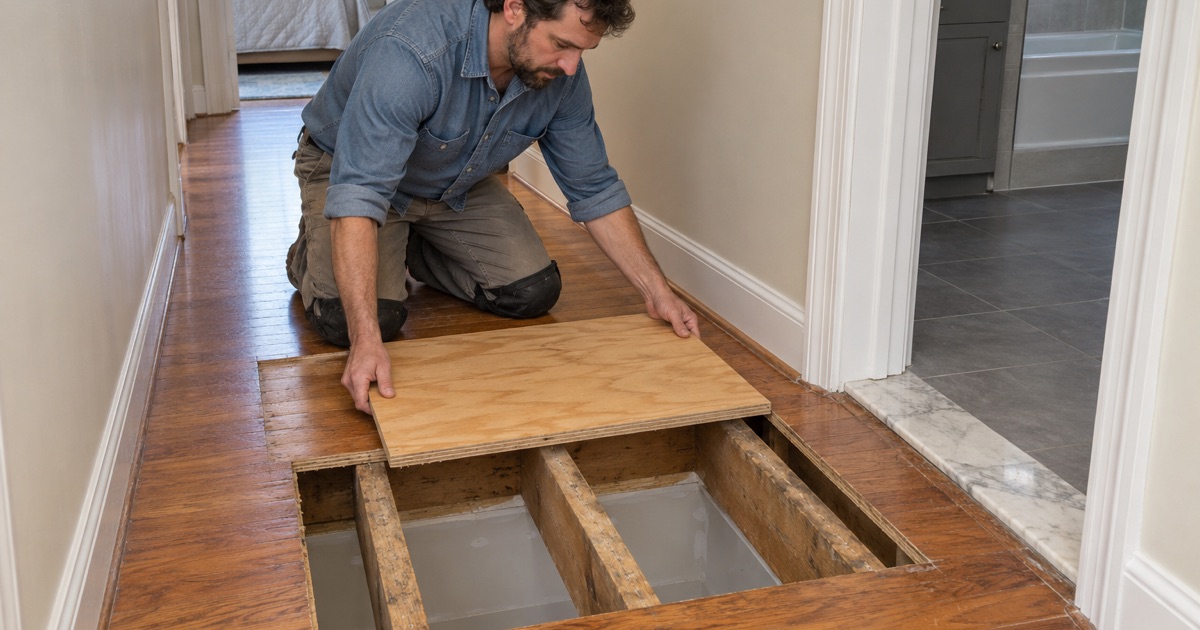
We remove the finished flooring over the damaged area, then cut out the soft subfloor back to solid material, ideally to the centerline of the joists on each side. New panels of the same thickness are glued and screwed into place, with blocking added where an edge falls between joists. The patch is then flush and stiff before flooring goes back down.
When the original subfloor is OSB, we check the edges of the surrounding panels too. OSB tends to swell at the edges when wet and may need its seams sanded flat even outside the damaged area.
Floor Joist Problems
Sometimes the subfloor is sound but a floor joist below it has cracked, been notched too deeply by a past trade, or been weakened by water or insects. We identify the problem and, for joist repairs beyond sistering or blocking, recommend the right structural trade. Relaying a floor over a failing joist only hides the problem for a while.
Second-Story Subfloors
Upstairs floors in two- and three-story homes sit on plywood or OSB over joists, and they carry every squeak and soft spot straight to the room below. We repair from above, protecting the ceiling below from dust and fasteners. The same subfloor check applies before installing new hardwood over carpet upstairs.
Concrete Slab Preparation
Grinding High Spots and Filling Low Ones
Most Chino homes sit on concrete slabs, and a slab has to be flat within the flooring manufacturer’s tolerance before wood goes over it. We grind high spots and ridges with a diamond grinder and fill low areas with a cement-based patch or self-leveling compound. That step prevents the hollow spots and popping that follow when boards are glued over an uneven slab.
Cracks and Old Adhesive
Small shrinkage cracks are normal in concrete, but cracks with height differences need to be leveled before flooring goes over them. Old carpet glue, tile thinset and vinyl adhesive also need to come off so new adhesive can bond. Where an old black adhesive is present, an asbestos survey comes before any grinding.
Moisture Testing
Before any wood goes onto a slab, we test for moisture with in-situ relative humidity testing or a calcium chloride test and write the reading down. After a slab leak repair, this step matters even more, because the concrete can stay wet long after the leak stops. The reading decides whether a moisture membrane is needed.
We test in more than one spot, including near exterior walls, bathrooms and any area that has had a leak. A single reading in the middle of a dry room can miss a damp corner. The readings go in writing so you have a record of the slab’s condition before the new floor went down.
Manufactured Home Floors
Swollen Particleboard and OSB Decking
Manufactured homes often have particleboard or OSB floor decking that swells and softens when water from a sink, tub, toilet or water heater gets into it. The floor can sag between supports and feel bouncy. We cut out soft decking back to solid framing, install new decking, and fasten it securely.
Chino has about 422 mobile home units across several parks, and many of these floors were built with materials that do not tolerate water well. Getting the decking right first is what keeps a new floor from sagging again.
Leveling Before New Flooring
A manufactured home that has settled on its supports can leave the floor out of level, which shows up as gaps at the walls and doors that do not close. Leveling the unit is its own trade; we coordinate so the floor is repaired after leveling, not before. The city’s manufactured home improvement loan brochure lists both leveling and floor repair among eligible improvements for owners in qualifying parks.
- 20+ Years of Wood Flooring
- Slab Moisture Tested First
- Free Written Estimates