
Chino Wood Flooring helps homeowners replace carpet with hardwood in Chino, CA, removing worn carpet and installing solid or engineered wood floors in living rooms, bedrooms, hallways and stairs, serving surrounding cities including Eastvale, Chino Hills, Ontario, Montclair and Norco. In more than 20 years of wood floor work, carpet replacement has become one of our most common projects.
The visible part of the job is simple: carpet out, wood in. The part that decides how the floor performs is underneath. We check what the carpet was hiding, test the slab or subfloor, and prepare it properly before any wood goes down.
Many newer homes were delivered with carpet in bedrooms and living areas, and many older homes have carpet laid over floors that have seen decades of wear. Either way, the plan starts with what is under your carpet.
What We Find Under Carpet
Concrete Slabs
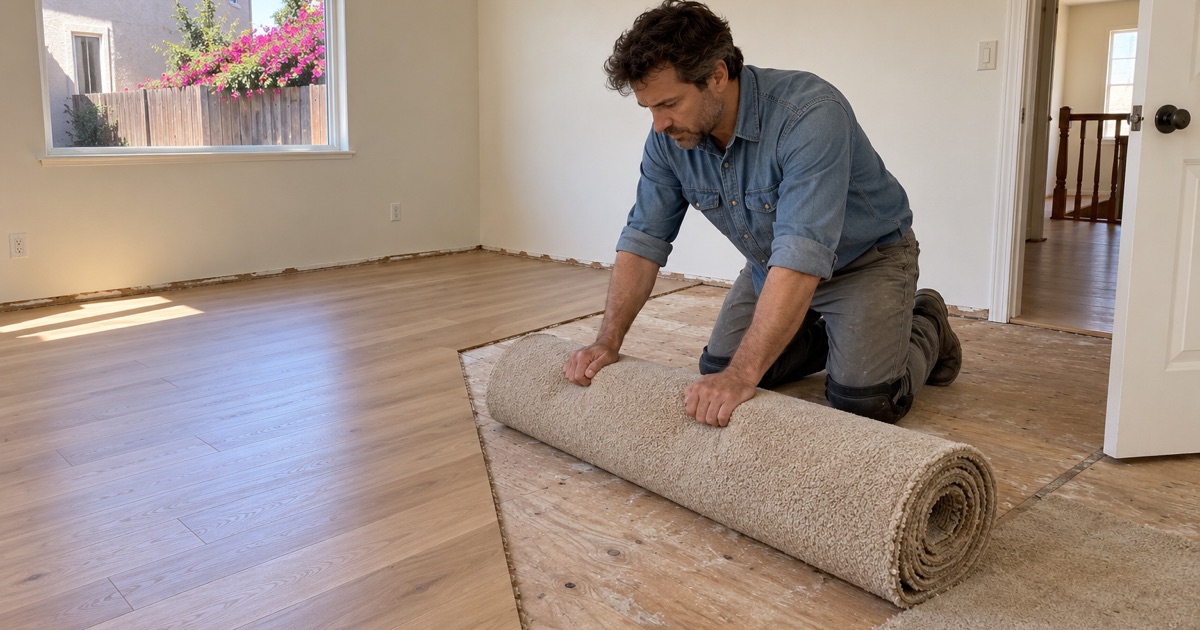
Most ground floors here are concrete slabs. After the carpet and pad come up, we remove the tack strip, which is nailed into the concrete, and patch the holes. Paint overspray, drywall mud and old adhesive are scraped off so the new floor can bond or lie flat.
We then test the slab for moisture and write the reading down against the NWFA guideline. Slabs under carpet often have never been tested, and the result decides the install method.
Plywood and OSB Upstairs
Upstairs rooms usually have plywood or OSB subfloors. We pull every staple, check for squeaks and soft spots, and fasten the subfloor to the joists where it moves. Carpet hides a lot of squeaks that become obvious under wood.
We also look at the subfloor seams and any old water stains near bathrooms and laundry rooms. A panel that swelled under a leak years ago may still be raised at its edges, and wood laid over it will show a ridge. Sanding or replacing that panel now costs far less than fixing the finished floor later.
Hidden Hardwood
In some older homes, especially those built in the 1970s and 1980s, carpet was laid over existing oak. That wood can often be restored, which may cost less than a new floor. We check under a corner before quoting.
Old oak under carpet usually carries staple holes, pad residue and a gray ring where the tack strip sat, but the middle of the room is often in better shape than an exposed floor of the same age. When some rooms have wood and others do not, we weave new boards of the same species into the existing floor so the whole level reads as one.
Choosing Hardwood to Replace Carpet
Engineered Hardwood for Slabs
Engineered hardwood is the usual choice over concrete. Its layered plywood or HDF core resists movement, and it can be glued down or floated. A thicker wear layer gives you the option to refinish later.
Because carpet usually covers bedrooms and living areas while tile or vinyl covers the kitchen and baths, replacing it often raises the question of whether to run wood through the whole ground floor. Continuous flooring removes transitions and makes rooms feel larger, and engineered wood over a tested slab makes that practical.
Solid Hardwood for Wood Subfloors
Solid hardwood can be nailed over plywood or OSB upstairs. It can be sanded and refinished many times. Matching the upstairs and downstairs floors is possible with the right product selection.
Species and Style
White oak, red oak, hickory and maple are common options. Wide plank floors suit open living areas, while narrower boards feel more traditional. We help you choose based on your home’s style and how much wear the floor will see.
Removing Carpet and Preparing the Floor
Tear-Out and Disposal
We remove carpet, pad and tack strip, and haul everything away. Furniture is moved room by room so the house stays usable.
Old carpet and pad hold years of dust, so we roll them up in place, bag the loose debris, and keep the work area closed off from the rest of the house. On a large job, we sequence rooms so bedrooms are usable each night. The schedule for which rooms are out of use and when goes in writing before we start.
Tack Strip Holes and Residue
Tack strip leaves holes in slabs and subfloors, and pad often leaves foam residue. We fill holes and remove residue. On restored hardwood, tack strip holes are filled with wood filler matched to the finished color.
Door Clearances and Heights
Hardwood is typically thinner than carpet and pad, which can leave a gap under doors, while floors that meet tile may need a reducer. We plan transitions and door adjustments during the estimate.
Installation and Finishing Details
Glue-Down, Floating or Nail-Down
Over slabs, we glue down with urethane flooring adhesive or float over the proper underlayment. Over wood subfloors, we nail with cleats or staples. The method depends on the product and the subfloor.
The slab reading plays a big part in that choice. A dry, flat slab suits glue-down, which feels most like solid wood underfoot. A slab that tests higher may call for an adhesive rated as a moisture barrier, a separate membrane, or a floating floor over a vapor-retarding underlayment. We explain the reason for whichever method we recommend.
Stairs and Landings
Many carpet replacements include stairs. We convert them to hardwood treads and risers, priced by the step, and match the finish to the new floor.
A carpeted staircase usually has a rounded bullnose on each step that was built to be covered. We cut it back and fit new treads with a matching nosing, or use retrofit treads where the structure calls for it. Doing the stairs in the same project keeps the colors matched and avoids a second round of dust.
Condos and Townhomes
In attached homes, associations often require approval and a specific acoustic underlayment before carpet is replaced with hard flooring. We check the rules and prepare the documents before ordering.
The underlayment matters to the neighbors below as much as to you. An acoustic underlayment reduces the footfall noise that carpet used to absorb, and some associations name a minimum rating. Choosing a compliant product up front avoids having to pull up a new floor after a complaint.
Baseboards and Trim
We reinstall or replace baseboard and add quarter round where needed to cover the expansion gap, so the finished floor looks clean at every wall. Existing baseboard is reused where it comes off cleanly, and painted to match where it is replaced.
Living With Your New Floor
Care and Maintenance
Hardwood is easier to clean than carpet. Regular sweeping, a damp mop, and felt pads under furniture protect the finish. Area rugs in bedrooms and living rooms can add warmth and absorb sound.
Refinishing Later
When the finish wears, a screen and recoat or full refinish can bring it back, unlike carpet, which has to be replaced. That long life is a big part of why hardwood is worth the investment.
- 20+ Years of Wood Flooring
- Slab Moisture Tested First
- Free Written Estimates