
Chino Wood Flooring installs and refinishes hardwood stair treads in Chino, CA, converting carpeted stairs to wood and restoring worn treads in two- and three-story homes, serving surrounding cities including Eastvale, Chino Hills, Ontario, Montclair and Norco. We have worked on wood stairs for more than 20 years, and we price every staircase by the tread and riser rather than hiding it in a square-foot number.
Stairs are the hardest-working part of a wood floor. They take concentrated foot traffic, the nosing takes every heel strike, and no two steps in an older staircase are exactly alike. That is why we measure each step on its own and build the price from the parts.
Whether you want to replace worn carpet with wood, refinish tired treads, or match new stairs to a new floor, you get a written quote that lists treads, risers, nosing, landings and returns separately.
Converting Carpeted Stairs to Hardwood
Removing Carpet and Tack Strip
Carpeted stairs hide tack strip on each tread, staples along the pad, and often a rounded bullnose that was never meant to be seen. We remove everything down to the stair structure, pull every staple and nail, and check each tread and riser for soundness. Loose or squeaky steps are fastened before new wood goes on.
Many newer two- and three-story homes were built with carpeted stairs as the standard finish, so the stair structure underneath is often plain framing lumber or particleboard treads. We check what the steps are made of before choosing the conversion method, because the attachment has to suit the material underneath.
New Treads, Risers and Nosing
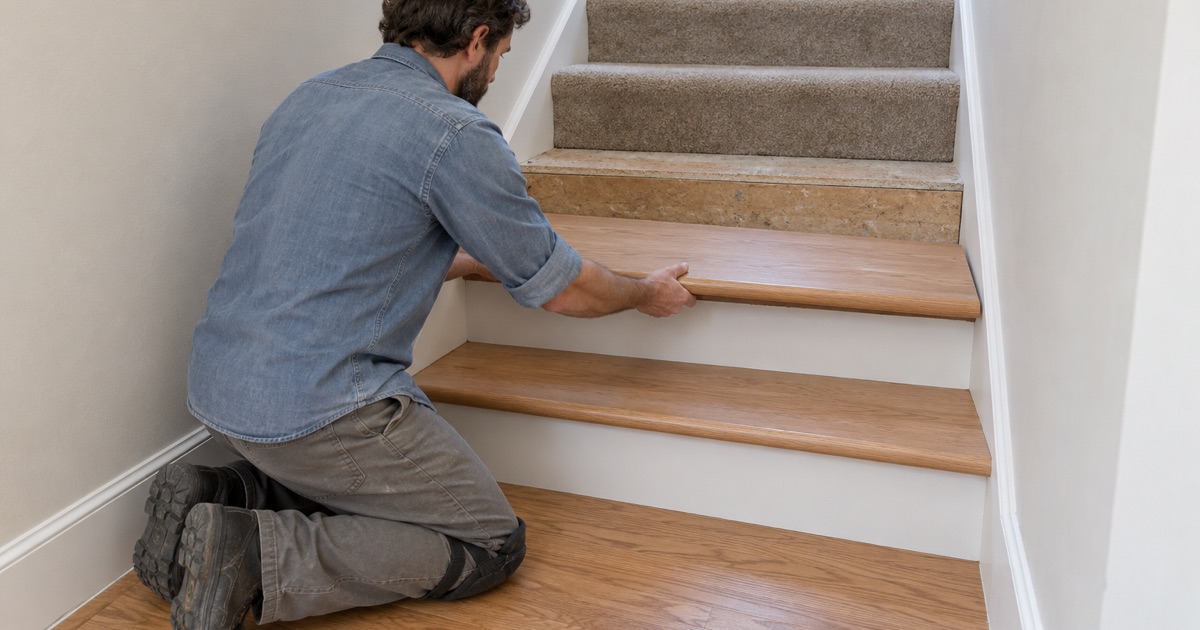
On many staircases, we cut back the existing bullnose flush with the riser, then install new hardwood stair treads with a matching stair nosing and new stair risers. Each tread is scribed to the walls or stringers, since no two stairs in a house are exactly square. The treads are glued and fastened so they stay tight and quiet.
Risers can be wood to match the treads or painted for contrast, which is a popular look with white oak treads. We finish them to suit the rest of the house.
Retrofit and Cap Treads
Where cutting the bullnose is not practical, retrofit or cap treads designed to go over the existing stairs can be used. They add some height, so we check that the first and last steps stay within safe, even rises. The choice depends on the stair construction, and we explain the tradeoffs on site.
Even rise height is a safety matter, not just a look. A staircase where the bottom or top step ends up taller or shorter than the rest is a trip hazard, especially going down. When new treads or a new floor at the top or bottom would change a rise, we plan for it before cutting any wood.
Refinishing Existing Wood Stairs
Sanding Stair Treads
A drum sander cannot reach stair treads, so each tread, riser and nosing is sanded by hand and with detail sanders. It is slower than floor sanding and takes careful work around balusters and walls. We work from the top down, so there is always a finished path.
When the stairs are the only way to bedrooms, we plan the finishing so the household can still get up and down. One common approach is to finish every other step first, then the rest once those are dry. It takes an extra day but keeps the house usable.
Stain and Finish
Stairs take the same stain and finish system as the adjoining floor, so the landing and treads match. We favor finishes that resist wear on the nosing, where traffic concentrates. All finishes we use are within the South Coast AQMD wood coatings limit.
Color matters more on stairs than people expect, because treads are seen from above and from the side at once. A tread stained darker than its landing stands out immediately. We test stain on an offcut of the actual tread material and hold it against the floor before committing.
Dealing With Paint and Old Finish
Many older staircases have painted risers, stringers and balusters next to the treads. In homes built before 1978, sanding near that paint falls under the EPA lead-safe rule, so we confirm the build year first and contain the work accordingly. We protect painted parts that are staying.
Stair Details and Design
Open-Sided Stairs and Returns
Stairs with an open side need tread returns, the end cap that finishes the exposed end of each tread. We cut and fit returns to match the tread profile, so the open side looks finished from the room below. These are priced separately because each takes time to fit.
Open-sided stairs also show the balusters and handrail, and those often get attention in the same project. We work around existing balusters carefully, and where new ones are planned, we coordinate so the treads are installed and finished in the right order.
Landings and Transitions
Landings are finished like a small floor and should match the treads and the upstairs flooring. Where the stair meets the upper floor, we use a flush nosing so the transition is smooth and safe. On a lower landing, we match the direction and finish of the adjacent floor.
Species and Durability
White oak and red oak are common choices for stair treads because they wear well and take stain predictably. Harder species like hickory and maple rate higher on Janka hardness, which helps on heavily used stairs. We match the treads to your floor or recommend a species for contrast.
Safety and Care
Finish and Traction
A satin or matte sheen level reduces glare and is easier on the eyes on stairs. Runners and non-slip options can add traction for children, older family members and pets. We discuss those before the finish goes on.
Squeaks and Loose Treads
Squeaky stairs usually mean a tread is rubbing a riser or stringer. We fix squeaks by gluing and fastening treads before new wood goes on, since fixing them after is harder.
On a stair that already has wood treads, we can often reach squeaks from below through a closet or storage space under the stairs, adding glue blocks and screws where the tread meets the riser. From above, small concealed fasteners hold a loose tread without visible repairs once the finish is applied.
Everyday Care
Stairs collect grit from shoes and pets, so regular sweeping and a damp mop keep the finish lasting longer. Nosing wear is normal over time, and a screen and recoat can refresh worn stairs before the wood shows.
- 20+ Years of Wood Flooring
- Slab Moisture Tested First
- Free Written Estimates